
A practical monthly calendar and task list for summer garden maintenance — watering strategies, pruning, soil care, pest management, and harvest tips to keep your garden healthy and productive.
Summer Garden Care: Monthly Tasks to Keep Plants Thriving
A practical monthly calendar and task list for summer garden maintenance — watering strategies, pruning, soil care, pest management, and harvest tips to keep your garden healthy and productive.
On this page
- Why summer garden care matters
- Monthly summer garden plan
- Smart watering strategies
- Soil & fertilization
- Pruning & deadheading
- Pest & disease control
- Harvesting & storage
- FAQs
- Image suggestions
- Topical clusters for SEO
- Sources & backlinks
Table of contents [Show]
- Why summer garden care matters
- Monthly summer garden plan (June — August)
- Smart watering strategies
- Soil health & fertilization
- Pruning, deadheading & structural care
- Pest and disease control
- Harvesting & storage
- Frequently asked questions (FAQs)
- Image placement & suggestions
- Topical clusters for SEO
- Sources & internal backlinks
- Conclusion
Why summer garden care matters
Summer puts plants under heat, drought, pests and heavy growth. A monthly maintenance rhythm prevents stress, improves yields, conserves water, and keeps pests from gaining a foothold. With the right seasonal plan, even small patches of urban soil produce big returns.
Monthly summer garden plan (June — August)
This calendar is tailored for a typical US summer. Adjust weeks for your local climate and microclimates.
June (Early summer)
- Inspect plants for overwintering pests and disease hotspots.
- Mulch flower beds and vegetable rows (2–3 inches) to conserve moisture.
- Set up drip irrigation or soaker hoses; check emitters for clogs.
- Plant heat-tolerant transplants for late summer harvest (peppers, eggplants).
- Fertilize established vegetables with a balanced, slow-release formula.
July (High summer)
- Water deeply and infrequently — early morning only to reduce evaporation.
- Deadhead flowers to promote continuous blooming.
- Thin overcrowded seedlings to improve airflow and reduce disease.
- Monitor for chewing pests (caterpillars, beetles) and apply targeted controls.
- Shade young or sensitive plants during heat waves using shade cloth.
August (Late summer)
- Continue deep watering and maintain mulch levels.
- Start succession planting for fall crops where climate allows.
- Harvest frequently to encourage production (beans, tomatoes, cucumbers).
- Collect seeds from heirloom varieties for next season.
- Prepare beds for fall amendments — add compost and soil tests if needed.
Smart watering strategies
Watering is the No.1 summer chore. Use water efficiently to keep plants healthy and reduce bills.
Principles
- Water deeply: target the root zone with 1–2 inches of water per week (more in extreme heat).
- Morning watering: water between 5–9am to reduce evaporation and fungal disease risk.
- Use drip or soaker hoses: they deliver water to roots and cut waste dramatically versus overhead sprinklers.
- Mulch: keeps soil cool and moist — use organic mulch for added nutrients as it breaks down.
- Group plants by water need: avoid overwatering drought-tolerant varieties and underwatering thirsty ones.
Soil health & fertilization
Summer is a feeding season. Healthy soil holds moisture and supports strong root systems.
Soil tips
- Test soil pH and nutrients before heavy fertilizing; many extension services offer low-cost tests.
- Use slow-release granular fertilizers or compost tea for steady nutrition.
- Top-dress beds with 1/2–1 inch of compost to refresh organic matter.
- Avoid heavy nitrogen late-season on perennials — it encourages foliage over blooms.
Pruning, deadheading & structural care
Pruning keeps plants productive and manages disease. Summer pruning should be conservative and focused.
What to prune in summer
- Deadhead spent blooms on annuals and perennials.
- Lightly trim shrubs after flowering to maintain shape.
- Remove diseased, crossing, or water-sucking suckers from roses and fruit trees.
- Avoid heavy pruning of spring-flowering shrubs (wait until late summer/early fall for major cuts).
Pest and disease control
Summer conditions fuel pests and fungal diseases. Integrated Pest Management (IPM) reduces chemical use and keeps ecosystems balanced.
IPM steps
- Monitor: inspect leaves weekly for early signs of pests or fungus.
- Identify: accurate ID avoids unnecessary sprays.
- Control: use mechanical controls (hand-picking), biologicals (beneficial insects), and, if required, targeted organic treatments (Bacillus thuringiensis, insecticidal soap).
- Prevent: crop rotation, sanitation, proper spacing, and resilient cultivars reduce outbreaks.
Harvesting & storage
Frequent harvest keeps productivity high and reduces disease pressure.
Harvest tips
- Pick vegetables in the cool morning for best flavor and shelf life.
- Handle produce gently and cool quickly; store tomatoes at room temperature until ripe, then move to cool storage if needed.
- Preserve surplus by freezing, canning, pickling, or dehydrating — plan your preserving strategy in early summer.
- Label and date stored goods for rotation.
Frequently asked questions (FAQs)
How often should I water my garden in summer?
Generally, provide 1–2 inches of water per week, applied deeply once or twice weekly. Increase during heat waves. Use a rain gauge to track natural precipitation.
Is it OK to fertilize in high heat?
It's fine with moderate temperatures, but avoid heavy nitrogen applications during extreme heat to prevent burn and excessive foliage growth at the expense of flowers or fruit.
What are the best organic pest controls?
Beneficial insects (ladybugs, lacewings), Bt for caterpillars, neem oil for some sap-feeders and fungal issues, and insecticidal soaps for soft-bodied pests.
How do I reduce water use without hurting yields?
Mulch heavily, use drip irrigation, water early, and choose drought-tolerant varieties. Group plants by water needs.
When should I start preparing for fall crops?
Start planning in mid-to-late summer; many fall crops (lettuce, spinach, radishes) transplant in late summer for cool-season harvests.
Image placement & suggestions
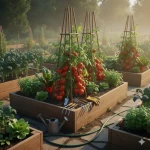
- Hero image: vibrant vegetable bed in full summer sun — Alt: "vegetable garden in mid-summer".
- Drip irrigation close-up: place in watering section — Alt: "drip irrigation lines in garden".
- Mulching action: gardener spreading mulch — place in monthly plan — Alt: "mulching garden beds".
- Beneficial insects: ladybug or lacewing on leaf — place in pest section — Alt: "beneficial insect on plant leaf".
- Harvest flat-lay: freshly picked tomatoes, beans, and herbs — place in harvest section — Alt: "freshly harvested garden produce".
Topical clusters for SEO
To amplify topical authority and internal linking, create short cluster posts that link back to this summer guide:
- "Drip Irrigation vs. Sprinklers: Water Efficiency for Home Gardens" — installation, DIY kits, emitter spacing.
- "Best Mulches for Vegetable Beds: Organic vs. Synthetic" — comparative guide and local sourcing tips.
- "Troubleshooting Tomato Diseases: Blossom End Rot, Blight, and More" — symptoms, prevention, and treatment.
- "How to Start a Compost System This Summer" — hot vs. cold composting, turning schedules, troubleshooting odors.
- "Urban Garden Pests: Controlling Rodents, Squirrels, and Raccoons Safely" — humane deterrence and prevention.
Homesmith can write these clusters next — each will include FAQs, local climate notes, and schema for maximum SERP visibility.
Sources & internal backlinks
Authoritative references and Homesmith pages linked for reader follow-up:
Conclusion
Summer garden care is a mix of regular attention, smart water use, and preventive pest management. Follow the monthly rhythm, plant smart, and preserve your harvests — and your garden will reward you with health, color, and flavor all season long.
© Homesmith. Content is informational only. For localized gardening advice, check with your county extension service or a licensed horticulturalist. Last updated: December 5, 2025.